Buying in Mexico
How to Buy Property in Mexico as an American (2026 Guide)
October 20, 2026 · 9 min read · Vasto
In this article
Yes, you can. How to buy property in Mexico as an American depends first on where the home is. Outside the restricted zone, a strip 100 km wide along the borders and 50 km wide along the coasts, you hold title in your own name. Inside it, which takes in Huatulco and Puerto Escondido, a Mexican bank holds title for you in a bank trust (fideicomiso) of up to 50 years, renewable. Either way, the sale is signed as a public deed before a Mexican notary and registered in the state property registry.
Budget about 4% to 9% of the price for closing costs on a cash purchase, and wire the money from a bank account, because cash payments of about USD 51,100 or more are illegal for real estate. The filing with Mexico's foreign ministry (SRE) is the only step written for foreigners. This guide goes in order, from the budget to the deed and what you pay every year after.
Restricted zone or direct title: the location decides the structure
The Mexican Constitution (Art. 27) bars foreigners from holding direct title to land within 100 km of a border or 50 km of a beach. Everywhere else, you own like a Mexican, after agreeing in writing not to invoke your government's protection over that property. That agreement is the convenio de renuncia, also called the Calvo clause.
| Where | Example towns | How an American holds title | SRE fee, 2026 |
|---|---|---|---|
| Inland, outside the zone | San Miguel de Allende, Amealco | Direct title in your name, after filing the convenio de renuncia | MXN 5,250 (about USD 285) |
| Coast or border, inside the zone | Huatulco, Puerto Escondido | Fideicomiso: a Mexican bank holds title and you're the beneficiary | MXN 21,650 permit (about USD 1,175), plus the bank's fees |
Since a 1998 SRE agreement, Americans buying outside the zone file only the written convenio, with no separate permit. If you hold Mexican nationality, including as a dual citizen, you buy as a Mexican, anywhere. We explain the trust in detail in fideicomiso Mexico explained.
How to buy property in Mexico as an American, step by step
- Set the budget, closing costs included. Add 4% to 9% to the price, plus the trust fees on the coast. If you'll borrow, compare routes in our Mexico mortgage calculator. Most Americans pay cash or borrow against a US home, as we explain in can Americans get a mortgage in Mexico.
- Confirm what kind of land it is. You want private property titled in the Registro Público de la Propiedad. Ejido (communal farm) land can be sold to outsiders only after dominio pleno, a conversion approved by the ejido assembly and registered. This and other checks are in mistakes to avoid buying property in Mexico.
- Choose your notary early. A notario público is a lawyer granted public faith by the state after exams, with far more authority than a US notary. The notary checks title, calculates the taxes, prepares the deed and registers it. The buyer can usually choose the notary.
- Sign a promesa de compraventa. This promise-to-purchase contract must be in writing, contain the essential terms of the sale and have a time limit (Federal Civil Code Arts. 2243–2247). If the seller later refuses to sign the deed, a judge can sign it in their place. The deposit is often about 10%, and many buyers hold it with an escrow company.
- Review the papers. The notary orders the certificado de libertad de gravámenes (no-liens certificate). The seller shows property-tax (predial) and water receipts paid to date, and an authorized appraiser values the home (avalúo), which sets the tax base. In a condominium, read the rules (reglamento) before you sign.
- File with SRE. Inland, the convenio de renuncia is filed by email or in person, by you or a representative. On the coast, the bank you choose as trustee requests the fideicomiso permit.
- Sort out your RFC. We found no federal rule that requires a buyer's RFC (Mexican tax ID), and SAT guidance has let notaries use a generic RFC for buyers who live abroad. Get your own if you plan to rent or sell later.
- Send the money by wire. Mexican law bans cash payments of 8,025 UMA or more for real estate: MXN 941,412.75 (about USD 51,100) in 2026. Before every transfer, call the notary or escrow company at a number you already have and confirm the account. More in how to pay for property in Mexico from the US.
- Sign the deed (escritura). You sign before the notary in person or through a representative. A power of attorney granted at a Mexican consulate costs MXN 3,148.72 (about USD 170) in 2026. One signed before a US notary needs an apostille, a translation by a court-authorized (perito) translator and protocolization by a Mexican notary. The deed itself can't be signed at a consulate.
- Registration. The notary pays the acquisition tax and registers the deed in the Registro Público. You receive the registered deed (testimonio) when the registry returns it.
Closing costs: what to budget by town
Each municipality sets its acquisition tax in its yearly income law, so the flat "2%" quoted online is often wrong. These are the 2026 figures:
| Item | 2026 amount | Notes |
|---|---|---|
| Acquisition tax, San Miguel de Allende | 2%–4% sliding scale | Applied after deducting MXN 427,946; about 2.1% on MXN 2M, 3.2% on 5M, 3.6% on 10M |
| Acquisition tax, Huatulco | 2.5%–4.75% by value, plus a 10% municipal surcharge | About 2.75% on MXN 1M, up to about 5.2% above MXN 10M |
| Acquisition tax, Puerto Escondido (San Pedro Mixtepec) | 2% plus a 5% surcharge, so 2.1% | El Puertecito, south-east of town, belongs to Santa María Colotepec, a different municipality |
| Acquisition tax, Amealco | About 5.94% | The 2% quoted for Querétaro city doesn't apply here |
| Notary fee | Often 1%–2.5% of the price, plus 16% VAT | Negotiable; ask for a written quote |
| Registry and no-liens certificate | Guanajuato MXN 2,574 + 470; Oaxaca MXN 1,642 + 528 | Per property |
| Appraisal | Roughly MXN 1.00–1.50 per MXN 1,000 of value | Private appraiser |
| SRE | Convenio MXN 5,250, or trust permit MXN 21,650 | Trust setup typically USD 1,500–3,000 including the permit |
| Title insurance | Optional one-time premium | Mexican policies come from insurers licensed by the CNSF, the insurance regulator |
Altogether, plan on about 4% to 9% for a cash purchase. The notary gives you a closing statement with the exact figures before you sign. We break the costs down by price in the cost of buying property in Mexico.
How long it takes
Most of the calendar goes to paperwork you can see coming. The legal clocks are short:
- SRE trust permit: decided within 5 business days at SRE's central offices or 30 at state offices; if SRE doesn't answer, it's deemed approved. The permit is valid for 180 days.
- Convenio de renuncia: if SRE needs INEGI to confirm the property's location, add about 20 business days.
- Acquisition tax: paid by the notary within 30 days of signing in San Miguel, Huatulco and Puerto Escondido, and within 15 business days in Amealco.
- Trust registration: the bank registers the trust in the foreign-investment registry within 40 business days.
The rest depends on how complete the seller's papers are and how fast your money moves. Put a closing date in the promesa and ask the notary whether it's realistic before you sign. Pre-construction follows its own calendar, with payments during the build; see buying pre-construction property in Mexico.
After closing: what you pay and file every year
- Predial (property tax). It's charged on the cadastral value, which is usually well below market value, so bills are low by US standards. Rates: San Miguel 0.234%–0.354%, Huatulco and Puerto Escondido 0.5%, Amealco about 0.125%. Paying the year in January earns 15% off in San Miguel and Huatulco, 20% in Amealco and 30% in Puerto Escondido.
- Water. In San Miguel, the town utility (SAPASMA) bills about MXN 374 a month for 15 m³ in 2026.
- Trust fee. On the coast, the bank charges typically USD 500 to 2,000 a year, depending on the bank.
- A Mexican will. A US will is valid in principle, but before it can be used in Mexico it generally has to be recognized by a court; Mexico City's notary law says so outright. A will signed before a Mexican notary (testamento público abierto) for your Mexican property spares your heirs that step. In a fideicomiso, also name substitute beneficiaries.
- US filings. Property you own directly isn't reported on the FBAR or Form 8938. A Mexican bank account is reportable on the FBAR once your foreign accounts total more than USD 10,000. Rental income and the eventual sale are covered in taxes on Mexican property for Americans and renting out your property in Mexico.
Buying a home and getting residency are separate processes. Under the 2026 rules, though, a property worth more than about USD 584,000 can qualify you for temporary residency; we explain how in Mexico residency through real estate.
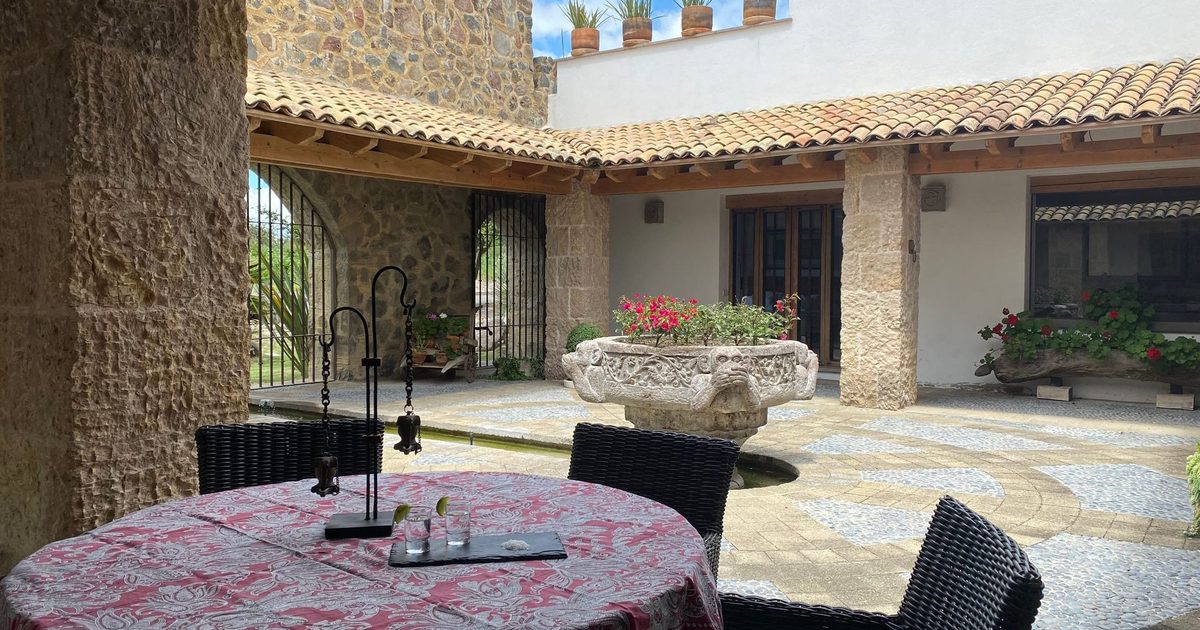
We live in San Miguel and on the Oaxaca coast, and we stay with buyers from the first offer to the deed: the notary, the SRE filing, the trust and the wire. If you're comparing an inland home with title in your name, like Casa Campanas, with a coastal one held in trust, like BB Residential in Huatulco, write to us and we'll walk you through both closings.
This guide is general information, not legal or tax advice. Confirm your case with a Mexican notary and a tax advisor.
Frequently asked questions
Sources
Updated October 20, 2026
- Ley de Inversión Extranjera (Foreign Investment Law), Cámara de Diputados
- SRE, convenio de renuncia for property outside the restricted zone
- SRE, 2026 fees and processing times
- Anti-money-laundering law (LFPIORPI), Cámara de Diputados
- Código Civil Federal (Federal Civil Code), Cámara de Diputados
- San Miguel de Allende 2026 income law (Ley de Ingresos)
What we chose

Bahía Salchi, Huatulco, Oaxaca
Benditas Villas de Salchi
Beach Villas
From USD $1,000,000

Residencial Conejos, Huatulco, Oaxaca
BB Residential
Residences above the Pacific
From USD $340,000
Malpaís, Nicoya Peninsula, Costa Rica
Star Mountain
Active Jungle Hotel
USD $20,000,000
Keep reading
Buying in Mexico
Buying Pre-Construction in Mexico: What to Check First
Buying pre-construction in Mexico: land title, permits, the developer's record, deposit protection, payment plans, contract clauses and the final balance.
October 20, 2026 · 8 min read
Buying in Mexico
Cost of Buying Property in Mexico: 2026 Closing Costs
The cost of buying property in Mexico in 2026: acquisition tax by town, notary, registry, trust fees and yearly costs, with a USD 500,000 worked example.
October 20, 2026 · 8 min read
Buying in Mexico
Fideicomiso Mexico Explained: How the Bank Trust Works
Fideicomiso Mexico guide: how the bank trust works on the coast, the 50-year term, SRE permit, bank fees, beneficiaries, selling and the IRS view.
October 20, 2026 · 7 min read