Living in Mexico
Where Do Americans Live in Mexico? 10 Places by the Numbers
October 20, 2026 · 7 min read · Vasto
In this article
Where do Americans live in Mexico? Those who move by choice, as retirees, remote workers or second-home owners, settle in a recognizable set of places: Lake Chapala and Ajijic, San Miguel de Allende, Mexico City, Puerto Vallarta, Mérida, Los Cabos, Mazatlán, Querétaro, the Oaxaca coast, and Playa del Carmen and Tulum. In 2025, Puerto Vallarta, Mexico City's Cuauhtémoc borough, San Miguel de Allende, Los Cabos and Playa del Carmen each saw more than 1,000 new residency cards issued to US nationals.
How many Americans live in Mexico overall depends on who is counting. The State Department estimates 1.6 million US citizens. INEGI, Mexico's statistics agency, counted 668,658 US-born residents in 2025. Both figures are correct; they measure different people.
How many Americans live in Mexico?
The State Department's U.S. Relations With Mexico fact sheet of September 16, 2024 says "an estimated 1.6 million U.S. citizens live in Mexico." No newer federal figure has been published.
INEGI counts by birthplace. Its 2020 census found 797,266 US-born residents, 65.8% of everyone born abroad. Its 2025 Intercensal Survey, published in September 2026, found 668,658, or 57.1% of the 1,170,030 foreign-born residents.
Why the two numbers differ:
- Citizenship vs birthplace. The State Department counts US citizens, and that estimate likely includes dual nationals and part-time residents. INEGI counts where people were born, whatever passport they hold.
- Children of Mexican families. Researchers at El Colegio de México found that about two-thirds of US-born residents in 2020 were under 18, and more than half lived with two Mexican parents. Under Mexico's Constitution, those children are Mexican by birth as well as American.
- Part-year residents. A household survey records who lives in the home on the survey date. Snowbirds who spend the summer in the US can be missed.
- Nationality. In 2025, 50.7% of Mexico's foreign-born residents held Mexican nationality.
Counted by birthplace, Tijuana (72,498) and Juárez (71,576) have more foreign-born residents than any other municipality. The places this article covers rank lower: Cuauhtémoc, in Mexico City, had 23,780.
A third measure tracks new arrivals: residency cards issued to US nationals by SEGOB, Mexico's interior ministry.
| Year | New temporary cards | New permanent cards |
|---|---|---|
| 2023 | 10,968 | 7,656 |
| 2024 | 9,548 | 6,233 |
| 2025 (preliminary) | 12,324 | 9,227 |
| Jan–Jul 2026 | 6,306 | 6,921 |
Of the 2025 permanent cards, 3,450 were in the "rentista" category, which covers retirees, pensioners and investors.
Where do Americans live in Mexico? Place by place
The order below is not a ranking. "Cards" means new residency cards issued to US nationals in 2025, temporary and permanent, from SEGOB's municipal tables. Populations are INEGI's.
Lake Chapala and Ajijic
Chapala municipality, in Jalisco, had 55,196 residents in 2020, and the lakeside town of Ajijic 11,439. Guadalajara's airport is about 25 km away in a straight line, farther by road. US nationals in Chapala received 364 temporary and 401 permanent cards. Jalisco is Level 3 in the State Department advisory, which places no restrictions on Chapala or Ajijic.
San Miguel de Allende
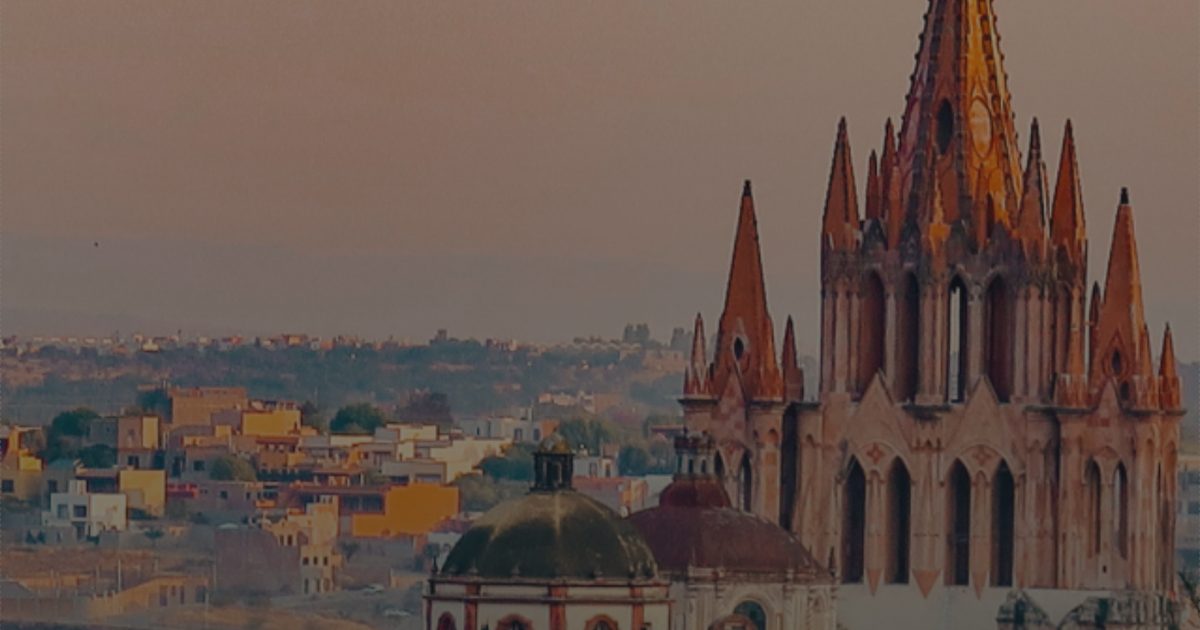
The municipality had 174,615 residents in 2020, and the census counted about 3,500 of them as born in the US, a figure that misses part-year residents. US nationals there received 697 temporary and 656 permanent cards. The town sits at 1,917 m (about 6,290 ft) and has no airport: Querétaro's is about an hour away and the Guanajuato airport (BJX) about an hour and a half. More on daily life is in our guide to moving to San Miguel de Allende.
Mexico City
Roma and Condesa are in the Cuauhtémoc borough, which had 545,884 residents in 2020. US nationals in Cuauhtémoc received 777 temporary and 319 permanent cards, and Mexico City as a whole issued 2,810 temporary cards to US nationals, more than any state. In July 2025, marches against gentrification in Roma and Condesa turned violent; press reports say the city then issued a plan, Bando 1, capping rent increases at inflation and adding short-term rental controls.
Puerto Vallarta
Puerto Vallarta (291,839 residents in 2020) and neighboring Bahía de Banderas, across the state line in Nayarit (187,632), are served by an airport that handled about 6.9 million passengers in 2025. Puerto Vallarta had more new permanent cards for US nationals than any other municipality: 769, plus 844 temporary. The advisory places no restrictions on Puerto Vallarta.
Mérida
Yucatán's capital grew from 995,129 residents in 2020 to 1,053,914 in 2025. Its airport is less than 5 km from the center, and Yucatán is rated Level 1, "Exercise normal precautions." US nationals in Mérida received 528 temporary and 418 permanent cards.
Los Cabos
Los Cabos grew from 351,111 residents in 2020 to 469,163 in 2025, and its airport (SJD) handled about 7.5 million passengers. US nationals there received 690 permanent and 450 temporary cards. Baja California Sur is Level 2.
Mazatlán
Mazatlán had 501,441 residents in 2020, and its airport is about 16 km from the city. Sinaloa is Level 4, "Do not travel"; the advisory's exception for Mazatlán covers arrival by air or sea and limited areas of the city. US nationals there received 192 temporary and 168 permanent cards.
Querétaro
The city had 1,049,777 residents in 2020 and the metro area 1,594,212. Its airport handled about 2.4 million passengers in 2025, with nonstops to Dallas/Fort Worth on American, Houston on United, and Atlanta and Detroit on Aeroméxico; Volaris announced Dallas, Denver, San Antonio, Orlando and Houston routes in April 2026. Querétaro is Level 2, with no specific restrictions for US government employees.
The Oaxaca coast
Huatulco had 50,862 residents in 2020, and San Pedro Mixtepec, the municipality that includes Puerto Escondido, 49,780. Puerto Escondido's airport added United service to Houston in April 2025 and American service to Dallas/Fort Worth in December 2025. The Barranca Larga–Ventanilla highway, opened in February 2024, cut the drive from Oaxaca City from 6.5 hours to 2.5. The advisory places no restrictions on Huatulco or Puerto Escondido. Our guides to buying property in Huatulco and Puerto Escondido cover each town.
Playa del Carmen and Tulum
The municipality INEGI now lists as Playa del Carmen (formerly Solidaridad) had 333,800 residents in 2020, and Tulum 46,721. Tulum's Felipe Carrillo Puerto International Airport opened on December 1, 2023, and Cancún's handled about 29.3 million passengers in 2025. US nationals received 483 temporary and 524 permanent cards in Playa del Carmen, and 179 and 122 in Tulum. Quintana Roo is Level 2, with a warning about gang shootings.
Summary table
| Place | Climate | Airport | What draws people |
|---|---|---|---|
| Lake Chapala / Ajijic | Mild, lakeside highland | Guadalajara (GDL) | Lake towns near a large city |
| San Miguel de Allende | Semi-arid temperate, 1,917 m; rain June–September | Querétaro (about 1 h), BJX (about 1.5 h) | UNESCO-listed center, arts, Spanish schools |
| Mexico City | Temperate highland | AICM, AIFA | Work, culture, flight options |
| Puerto Vallarta | Tropical coast | PVR | Beach town with frequent US flights |
| Mérida | Hot, humid lowland | MID, under 5 km from the center | Colonial city in a Level 1 state |
| Los Cabos | Desert coast | SJD | Sea and desert, US flights |
| Mazatlán | Tropical coast | MZT, about 16 km | Historic port; travel limits apply |
| Querétaro | Semi-arid highland | QRO | Large city, jobs, US nonstops |
| Oaxaca coast | Tropical; Huatulco gets 94% of its rain May–October | HUX, PXM | Bays, surf, a national park |
| Playa del Carmen / Tulum | Hot Caribbean coast | CUN, TQO | Caribbean beaches, two airports |
What the numbers leave out
Residency cards measure new arrivals, not totals, and they include some US-born children of Mexican families. The census misses part-year residents. Neither tells you what a place feels like in its off season: in San Miguel, about 74% of the year's rain falls from June to September, and on the Pacific coast, hurricane season runs from May 15 to November 30.
The State Department reissues its Mexico advisory periodically; the current version dates from May 29, 2026. If you plan to stay, the next questions are the residency rules, covered in our guide to Mexico residency through real estate, and, for retirees, Medicare and Social Security in our guide to retiring in Mexico.
Where Vasto's homes are
In Mexico, Vasto's homes are in two of these places, San Miguel de Allende and the Oaxaca coast, and in Amealco, about 79 km from downtown Querétaro. In San Miguel, Casa Campanas sits in a gated residential area with 24/7 security, five kilometers from the center and less than one from the Hípico Otomí. If you're still comparing towns, we can tell you what we see on the ground in each of them.
Frequently asked questions
Sources
Updated October 20, 2026
What we chose

Bahía Salchi, Huatulco, Oaxaca
Benditas Villas de Salchi
Beach Villas
From USD $1,000,000

Residencial Conejos, Huatulco, Oaxaca
BB Residential
Residences above the Pacific
From USD $340,000
Malpaís, Nicoya Peninsula, Costa Rica
Star Mountain
Active Jungle Hotel
USD $20,000,000
Keep reading
Living in Mexico
Mexico Residency by Buying Property: 2026 Rules and Amounts
Mexico residency by buying property: the 2026 threshold (about USD 584,000), the income and savings routes, consulate figures and the path to permanent.
October 20, 2026 · 7 min read
Living in Mexico
Retiring in Mexico: Residency, Health Care and Money in 2026
Retiring in Mexico in 2026: residency income tests, Social Security after Directo a México closes, Medicare limits, IMSS costs and driving a US car.
October 20, 2026 · 8 min read
Buying in Mexico
Buying Pre-Construction in Mexico: What to Check First
Buying pre-construction in Mexico: land title, permits, the developer's record, deposit protection, payment plans, contract clauses and the final balance.
October 20, 2026 · 8 min read