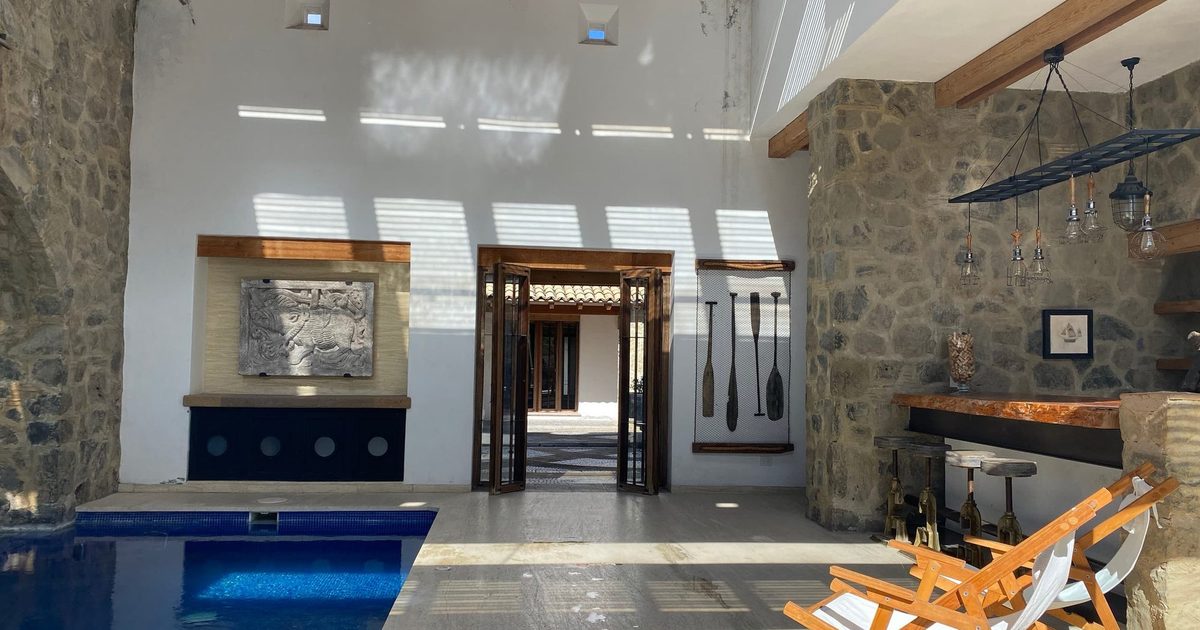
Financing
Using a HELOC to Buy Property in Mexico: Costs and Risks
October 20, 2026 · 7 min read · Vasto
In this article
Yes, you can use a HELOC to buy property in Mexico: you borrow against your US home, wire the money, and close in Mexico as a cash buyer. As of October 2026, HELOCs average 7.34%, variable and tied to the US prime rate (7.00%), and most lenders cap your mortgage plus the line at 80% of your home's value.
The two alternatives are a cash-out refinance, about 7.65% fixed and replacing your whole first mortgage, and a home-equity loan, a fixed-rate lump sum averaging 8.63% to 8.70%. If you locked a 3% mortgage in 2020 or 2021, the choice between them can be worth several hundred dollars a month. Here is how each works, what they cost today, and the math.
HELOC, cash-out refi or home-equity loan: how each works
| HELOC | Cash-out refinance | Home-equity loan | |
|---|---|---|---|
| How you get the money | A credit line you draw as needed | A new, larger first mortgage; you keep the difference | A lump sum, as a second mortgage |
| Rate, October 2026 | 7.34% average (offers 6.24%–7.67% APR) | Offers 6.749%–7.875%; about 7.65% typical | 8.63% (5-year) to 8.70% (10-year) average |
| Rate type | Variable, tied to prime | Fixed | Fixed |
| Your current mortgage | Stays as is | Paid off and replaced | Stays as is |
| Borrowing limit | Mortgage plus line up to about 80% of value; some lenders 85%–90% | New loan up to 80% of value (75% on a second home) | Mortgage plus loan up to about 80%; some lenders go higher |
| Typical structure | 10-year draw (interest-only allowed), then 20-year repayment | 30 years | Fixed terms, often 5 to 15 years |
| Closing costs | Low or none; some annual or early-closure fees | 2%–5% of the new loan | Varies: origination, appraisal and title fees |
Rates are from Bankrate's surveys of October 14 and 19, 2026. The 7.65% refinance figure is Freddie Mac's 30-year average (7.40%) plus a quarter point, the low end of the usual cash-out premium. Bankrate's home-equity averages are for a $30,000 loan, so a larger loan is priced case by case.
How much you can borrow: the 80% rule
Lenders look at combined loan-to-value: everything you owe on the house divided by what it's worth. Say your home is worth $800,000 and you owe $355,625. Eighty percent of $800,000 is $640,000, so a HELOC or home-equity loan at 80% would top out around $284,000. A cash-out refinance uses the same 80% limit on a primary residence, but the new loan includes what you already owe.
Size the line for the whole purchase, not just the price. Mexican closing costs on a cash purchase typically run about 4% to 9% of the price, depending on the town, and on the coast the bank trust adds an SRE permit (MXN 21,650 in 2026) plus the bank's setup fee. Our guide to the cost of buying property in Mexico breaks them down.
Using a HELOC to buy property in Mexico after the Fed's September hike
The Fed raised its target range by a quarter point on September 16, 2026, to 3.75%–4.00%. Prime sits at 7.00%, and Bankrate's HELOC average went from 7.11% on September 16 to 7.34% on October 14. The line moves with prime, so your payment does too.
On a $250,000 balance, interest-only payments during the draw period look like this:
- $1,529 a month at 7.34%
- $1,738 at 8.34%, if rates rise another point
- $1,946 at 9.34%, if they rise two
When the 10-year draw period ends, the balance converts to principal and interest. Over 20 years at 7.34%, that's $1,990 a month. Watch for introductory rates: Bankrate lists teasers of 4.99% to 5.99% that usually last 6 to 12 months before resetting.
A HELOC fits pre-construction well. You draw each installment as it comes due and pay interest only on what you've drawn, instead of borrowing the full price on day one.
What a cash-out refi costs when you have a 2021 mortgage
Take a $400,000, 30-year mortgage at 3.00% from late 2021. The payment is $1,686, and after five years you owe about $355,625. You need $250,000 for a home in Mexico.
| Keep the 3% loan + HELOC | Keep the 3% loan + home-equity loan | Cash-out refinance | |
|---|---|---|---|
| New borrowing | $250,000 at 7.34%, variable | $250,000 at 8.69%, fixed, 15 years | $605,625 at 7.65%, fixed, 30 years |
| Total monthly payment | $3,216 interest-only, or $3,676 with repayment over 20 years | $4,176 | $4,297 |
| First-year interest | About $28,900 | About $31,900 | About $46,100 |
| Closing costs | Low or none | Varies | $12,100–$30,300 (2%–5%) |
The refinance's $4,297 includes $2,523 a month just to carry the $355,625 you already owed, now at 7.65% instead of 3%. That's $837 more each month on old debt before a dollar goes to Mexico, and it restarts a 30-year clock on a loan that had 25 years left. In year one, the refi costs about $17,000 more in interest than keeping your mortgage and adding a HELOC.
A cash-out refi still makes sense in two cases: your current rate is already near today's rates, or you own the home outright. With no mortgage, the refi is simply a new fixed first mortgage, and 7.65% is below the home-equity loan average. If you want a fixed payment and keep a low first mortgage, the home-equity loan costs more per month than a HELOC but won't move with the Fed.
You arrive in Mexico as a cash buyer
However you borrow in the US, the seller in Mexico sees a cash buyer. That changes a few things:
- A simpler closing. No Mexican lender means no lender appraisal, no lender title-insurance requirement and no loan underwriting in Mexico. You still close before a notary, and on the coast (Huatulco, Puerto Escondido) a foreigner holds title through a bank trust. San Miguel de Allende and Amealco are inland, so you hold title directly after filing a written agreement with Mexico's foreign ministry (SRE).
- Room to negotiate. Some sellers accept a lower price for a clean cash offer; reports put cash discounts at 2% to 5%. It's a negotiation, not a rule.
- Currency. If the property is priced in dollars, borrowing in dollars leaves no exchange-rate risk. If it's priced in pesos, you convert at closing. Our guide on how to pay for property in Mexico from the US covers wires and exchange.
Questions to ask before you open the line
- What is the margin over prime, and is there an introductory rate? When does it reset, and to what?
- Are there annual, application or early-closure fees? Some lenders charge them even when closing costs are low.
- How long is the draw period, and can you pay interest only during it?
- Can you lock part of the balance at a fixed rate?
- What combined loan-to-value will the lender allow on your home: 80%, 85% or 90%?
- How quickly can you draw and wire the funds? Your closing date in Mexico and the notary's schedule depend on it.
Risks to weigh
- Your US home is the collateral. If you miss payments, the lender can foreclose on it, whatever happens with the Mexican property.
- The rate is variable, and the Fed has just raised rates.
- The line can shrink. Lenders can freeze or reduce a HELOC if your home's value drops significantly. If you're counting on it for a pre-construction balance due in two years, plan for that.
- No mortgage-interest deduction, as a rule. IRS Publication 936 allows the deduction on home-equity debt only when the money buys, builds or substantially improves the home that secures the loan. A purchase in Mexico doesn't meet that test.
- Selling your US home means paying off the HELOC or refinanced loan at that closing.
To compare these routes with a cross-border dollar loan or a Mexican bank on the same price, use our Mexico mortgage calculator. For the full list of options, see can Americans get a mortgage in Mexico, and for how these rates stack up against peso loans, Mexico vs. US mortgage rates.
If you're sizing a line of credit for a specific home, the eight residences at BB Residential in Huatulco are listed in dollars, from USD $340,000 to $568,251. We can check what your equity covers and walk the cash closing with you, from the offer to the deed.
This guide is general information, not legal, tax or financial advice. Confirm your case with your lender, a Mexican notary and a CPA.
Frequently asked questions
Sources
Updated October 20, 2026
What we chose

Bahía Salchi, Huatulco, Oaxaca
Benditas Villas de Salchi
Beach Villas
From USD $1,000,000

Residencial Conejos, Huatulco, Oaxaca
BB Residential
Residences above the Pacific
From USD $340,000
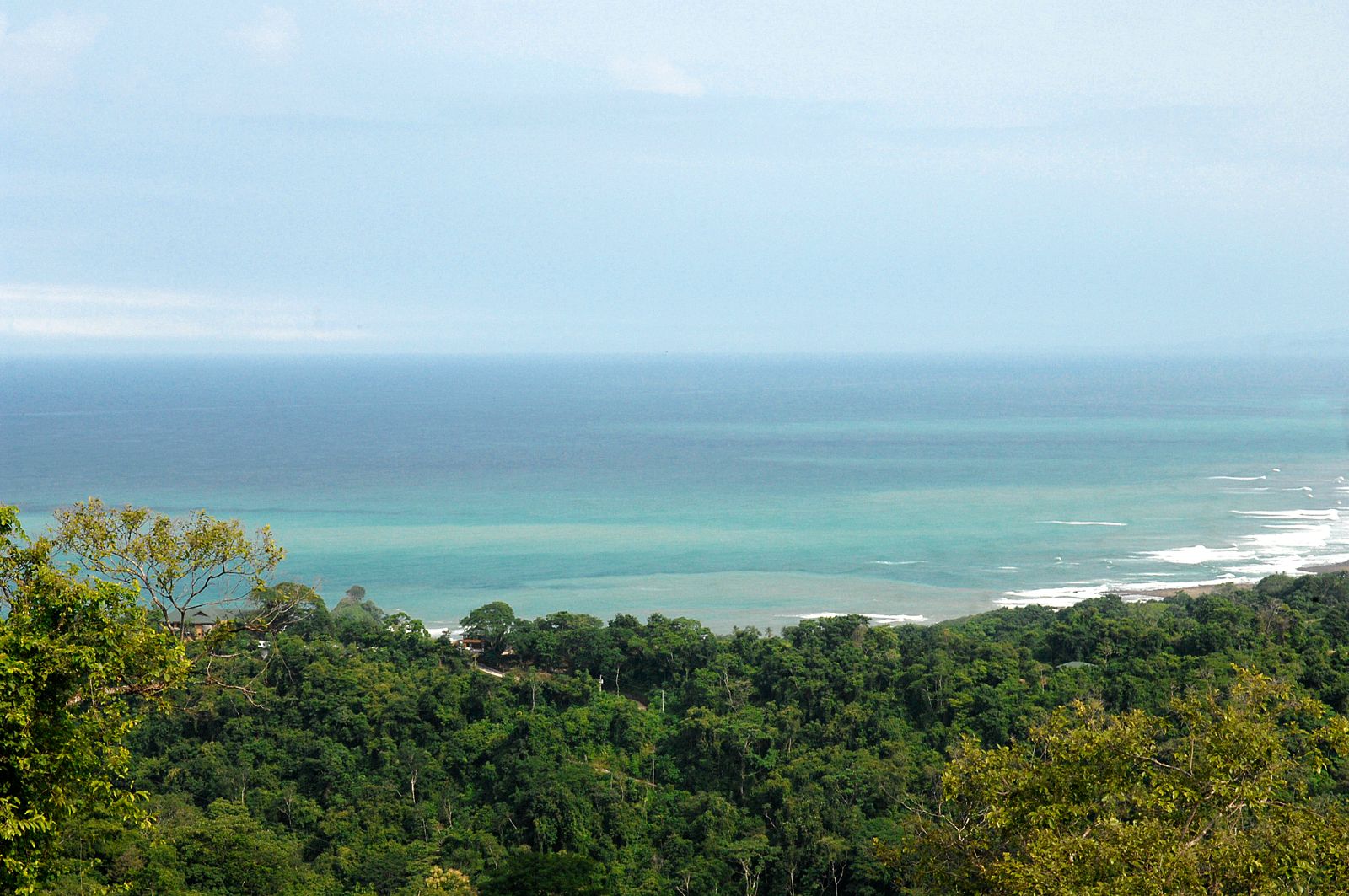
Malpaís, Nicoya Peninsula, Costa Rica
Star Mountain
Active Jungle Hotel
USD $20,000,000
Keep reading
Financing
Mortgage in Mexico for Americans: Your Options in 2026
A mortgage in Mexico for Americans: HELOCs, cash-out refis, US-dollar loans, Mexican banks and developer plans compared, with October 2026 rates and rules.
October 20, 2026 · 8 min read

Financing
Mexico Mortgage Rates 2026: How They Compare With US Rates
Mexico mortgage rates 2026: peso loans at 9.15%–13.25% and dollar loans at 10.0%–12.4%, vs. 7.40% in the US. Why, the currency risk and a worked example.
October 20, 2026 · 7 min read
Buying in Mexico
Buying Pre-Construction in Mexico: What to Check First
Buying pre-construction in Mexico: land title, permits, the developer's record, deposit protection, payment plans, contract clauses and the final balance.
October 20, 2026 · 8 min read